Section 7: Signs, Signals, & Markings
Section 7: Signs, Signals & Markings
This Section Covers
- Road Signs
- Shapes of Signs
- Regulatory Signs
- Warning Signs
- Guide Signs
- Construction and Maintenance Warning Signs
- Service Signs
- Traffic Signals and Signs
- Lane Control Signals
- Overhead Lane Signs
- Pedestrian Signals
- PHB/WALK Signal
- Pavement Markings
- Stop Lines
- Crosswalk Lines
- Railroad Crossings
- Center Lines
- No Passing Lines
- Edge Lines
- Lane Lines
- Traffic Striping
- Turn Lanes
- Bicycle Lanes
- Roundabouts
It's the Law
Georgia law requires that all drivers, including bicyclists, obey official highway signs and traffic control signals unless otherwise directed by a police officer or emergency worker.
Road Signs
Shapes of Signs
The State of Georgia uses seven basic shapes of signs to convey traffic control instructions. Drivers should know signs by their shapes and colors so that they may recognize them from a distance and begin reacting timely and appropriately.
Vertical rectangle signs
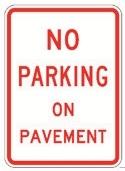
Vertical Rectangle signs are generally used for regulatory signs, which tell you what you must do. You must obey them in the same manner as traffic laws.
Horizontal rectangle signs
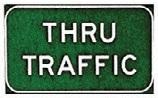
Horizontal Rectangle signs are generally used as guide signs. They show locations, directions, or other special information.
Octagon signs
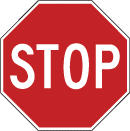
An Octagon (eight-sided shape) always means stop. When you come to it, you must make a complete stop at a marked stop line. If there is no stop line, stop before the crosswalk on your side of the intersection. If there is no crosswalk, stop at a point from which you can best see oncoming traffic. You must not start again until all pedestrians have finished crossing on the side of the roadway you are traveling on, and you have yielded the right-of-way to closely approaching traffic.
Section 7 Continued
Triangle signs
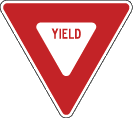
Triangle signs mean yield. You must slow down to a speed that is reasonable for existing conditions and stop if necessary. If you must stop, do so at a marked stop line, if it exists. After slowing or stopping, you must yield the right-of-way to other vehicles in the intersection or approaching closely on another roadway or auxiliary road leading into a major highway.
Diamond signs
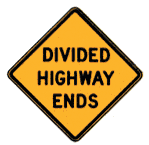
Diamond shaped signs warn of existing or possible hazards on roadways or adjacent areas. They are yellow with black words indicating the potential hazard, or black symbols visually describing the potential hazard.
Round signs
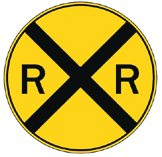
A round sign means you are approaching a railroad crossing. This sign is posted a few hundred feet in front of the tracks and alerts you to slow down, look, listen and prepare to stop. If necessary, roll down a window and listen carefully for an approaching train. If a train is approaching, stop! Do not try to calculate whether you can "make it" across the track. Never try to beat a train through the intersection. Passing is prohibited at all railroad crossings.
Pentagon signs
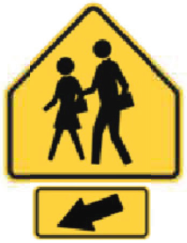
Pentagon shaped signs mean you are approaching a school zone and/or school crossing. When used, they will be erected not less than 150 feet nor more than 700 feet in advance of the school grounds or school crossing. (These signs can sometimes be fluorescent green in color.)
Regulatory Signs
Regulatory signs tell drivers what they may or may not do. Drivers, including bicyclists, must obey them in the same manner as traffic laws. Remember, a red circle with a red slash from upper left to lower right means "No." The picture within the circle shows what is prohibited.
Wrong way sign
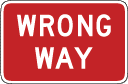
You are approaching a one-way highway or ramp. Driving on the highway or ramp in the direction you are traveling is not allowed.
No U turn sign
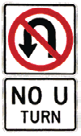
You cannot turn around to go in the opposite direction at this intersection.
Reduced speed ahead sign
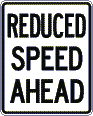
You are approaching an area where a reduced speed limit has been established.
School speed limit sign
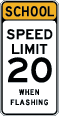
You are approaching a school zone. A reduced speed limit is in effect when the yellow lights are flashing.
One way sign
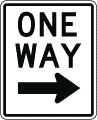
You may travel only in the direction of the arrow.
No right turn sign
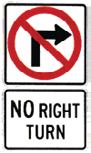
You cannot make a right turn at this intersection.
Slower traffic keep right sign
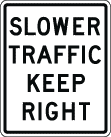
When two or more traveling lanes are available in the direction you are traveling, slower traffic should travel in the right (outside) lane(s).
No bicycles sign
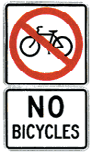
Bicycles are prohibited from entering this roadway.
Do not enter sign
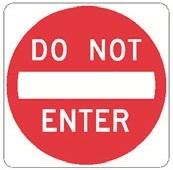
This marks a one-way road. If you are facing this sign traffic is coming toward you. You must not continue down the road.
Keep right sign
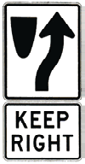
Traffic is required to keep to the right of medians or obstructions.
Speed limit 55 sign
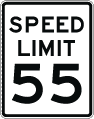
55 miles per hour is the maximum speed limit permitted in this area.
No right turn on red after stop sign
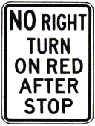
A right turn on red is prohibited, even after coming to a complete stop.
No trucks sign
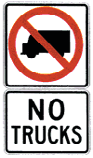
Trucks are prohibited from entering this roadway.
Section 7 Continued: Warning Signs
Warning Signs
Warning signs are usually yellow with black markings. (Warning signs can also be fluorescent green with black markings.) They alert you to conditions that are immediately ahead. There may be road hazards, changes in traffic direction, or some other potentially hazardous situation that requires action on your part.
Sharp right turn then sharp left turn sign
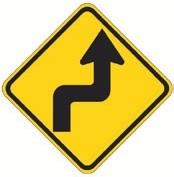
Sharp turn to the right and then sharp turn to the left.
Side road enters at an angle sign
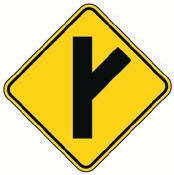
Side road enters highway ahead at an angle.
Narrow bridge sign
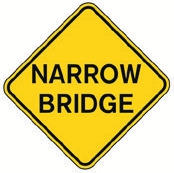
The bridge ahead allows room for only two lanes of traffic. Approach with caution.
Soft shoulder sign
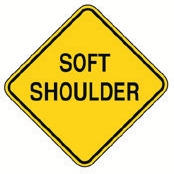
Shoulder of the road is soft. Drive on the shoulder only in emergencies.
Two way traffic sign
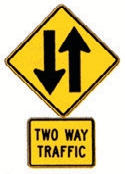
Warning that you are leaving a separated one-way highway and will soon be driving on a two-way highway.
Sharp right turn sign
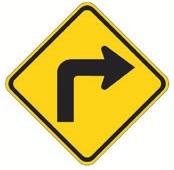
Sharp turn to the right.
Winding road sign
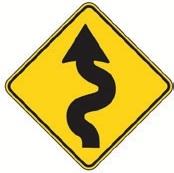
Winding road ahead.
Road crossing ahead sign
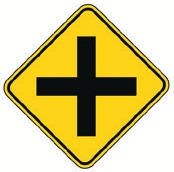
Another road crosses the highway ahead.
Dip sign
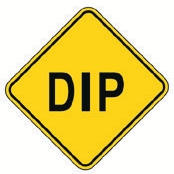
There is a dip in the road ahead. Slow down!
Divided highway sign
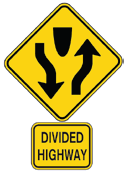
Divided highway begins. Prepare to change lanes or shift lane position.
Low clearance sign
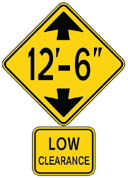
Approaching a low underpass. Do not enter if your vehicle or cargo exceeds the maximum height indicated on the sign.
Right curve sign
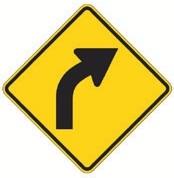
Curve to the right.
Section 7 Continued: More Warning Signs
Side road enters ahead sign

Side road enters highway ahead.
Road ends sign
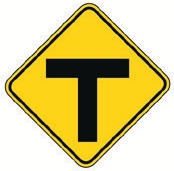
The road you are traveling on ends straight ahead. Slow down and prepare to yield or stop before turning right or left.
Bump sign
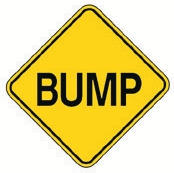
There is a bump in the road ahead. Slow down!
Divided highway ends sign
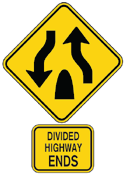
Divided highway ends. Prepare to change lanes or shift lane position.
Hill sign
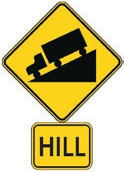
Steep hill ahead. Slow down and be ready to shift to lower gear to control speed and protect brakes from damage.
Signal ahead sign

Presence of traffic signals at intersection ahead. Slow down!
Slippery when wet sign
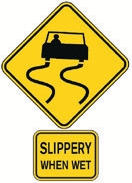
Roadway is slippery when wet. Remember, the first half-hour of rain is most hazardous.
Merge sign
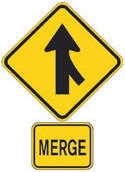
Traffic merging from the right. Prepare to allow traffic to safely merge.
Yield ahead sign
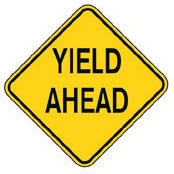
There is a yield sign ahead. Slow down and prepare to stop if necessary.
Stop ahead sign
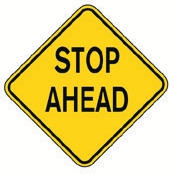
There is a stop sign ahead. Begin to slow down and be prepared to stop.
Pedestrian and animal crossing signs

These signs alert drivers in advance of areas where animals, people, and vehicles may be crossing.
Watch for pedestrians in the crosswalk sign

Drivers must stop and stay stopped when pedestrians are in the crosswalk.
No passing zone sign
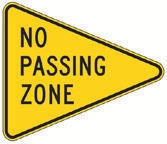
This sign is on the left side of the highway and marks the beginning of a no passing zone. Any passing maneuver must be completed before reaching this sign.
Speed limit signs
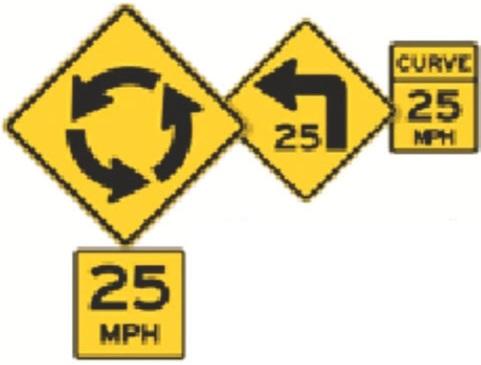
These signs may be accompanied by speed advisory plaques that indicate the speed with which you should proceed.
Lanes reduced sign
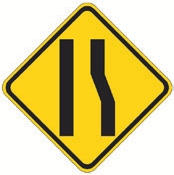
Number of lanes reduced ahead.
Section 7 Continued: Guide Signs
Guide Signs
Guide signs may indicate what road you are on, and how to get to your destination. Many guide signs are rectangular, but some have other shapes. There are several different kinds of guide signs — route markers, information, destination, distance, and location signs. These signs may be accompanied by a "To" sign or an arrow, indicating the highway, facility, or location that can be reached by following the signs.
Here are some examples:
Exit 44 sign
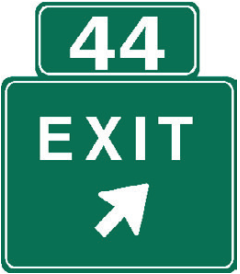
Numbered interstate and highway signs
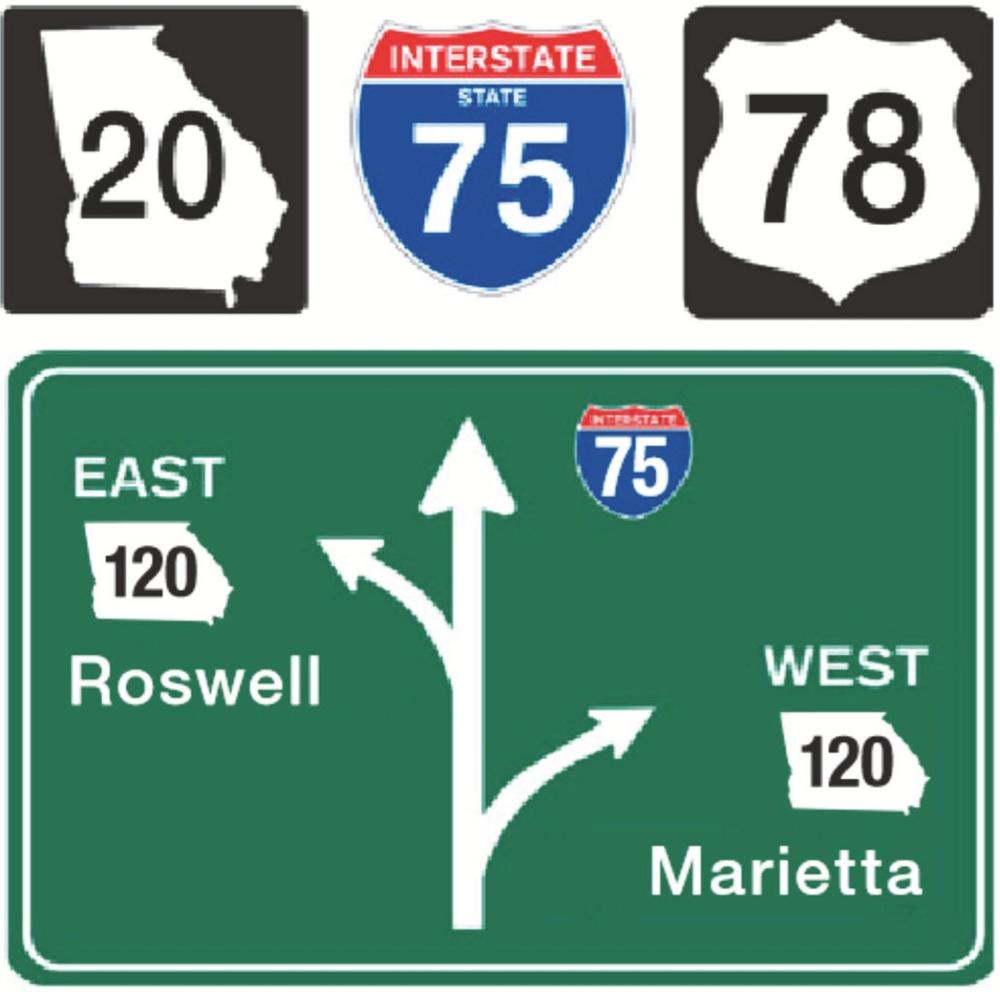
The numbers on these signs designate specific exits, interstates or highways.
Junction sign
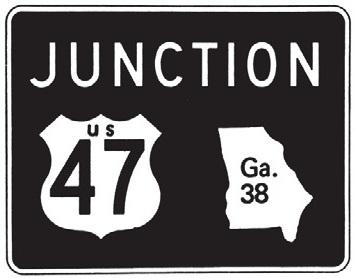
Intersection of U.S. Route 47 & Ga. Highway 38. These roads are going to cross or meet the highway you are traveling on.
Milepost marker
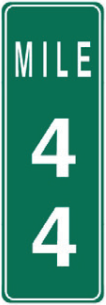
Milepost markers are placed each mile along the edge of the roadway from one end of the state to the other. Zero always starts at the south or west border where a route begins.
Caution sign
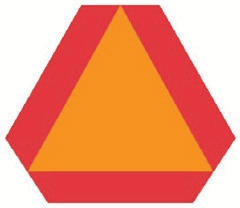
Caution - a vehicle displaying this emblem is a slow-moving vehicle. A slow-moving vehicle is defined as any vehicle moving less than 25 miles per hour. They are required by law to display this emblem.
Bike route sign
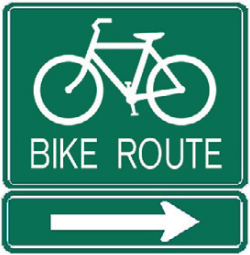
This sign marks an officially designated bicycle route. Be cautious of bicyclists while traveling on this road.
Parking sign
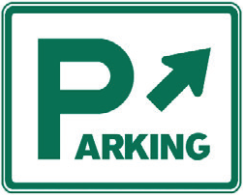
This sign means there is a public parking area in the direction of the arrow.
Railroad crossing sign
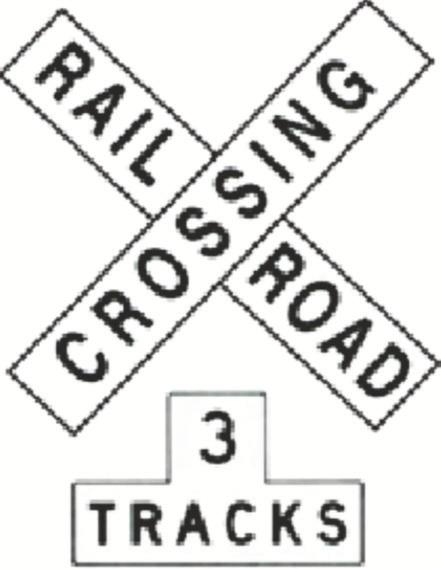
The cross-buck is placed at all railroad crossings. Yield to any approaching trains. Slow down, look and listen before crossing. A sign below the cross-buck indicates the number of tracks. A complete stop is required when a red light is flashing.
Section 7 Continued: Construction & Maintenance Warning Signs
Construction and Maintenance Warning Signs
Road construction and Flagman signs
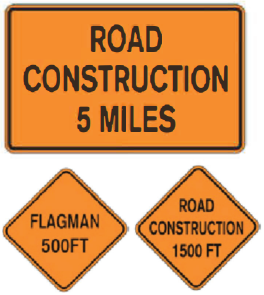
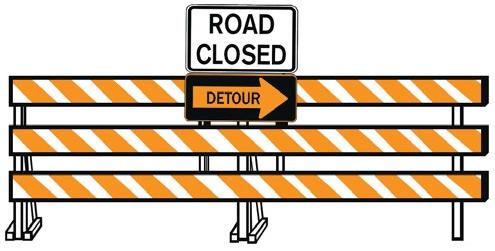
Warning signs for construction and maintenance projects are used to alert you to dangers ahead and give you enough time to adjust your speed accordingly. These signs are orange with black markings.
Road closed sign
Service Signs
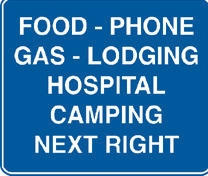
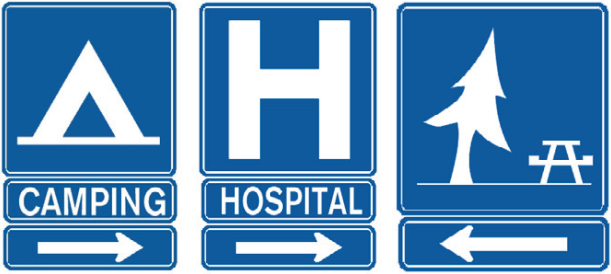
While traveling along Georgia's highways, the following blue and white signs will give directions to service facilities.
Camping, hospital and picnic area signs
Express Lanes
Express Lanes offer motorists the option to pay a toll to bypass congestion in certain areas on the interstate. All vehicles with no more than two axles or up to six wheels can use Express Lanes if they have a registered Peach Pass. When the vehicle travels through the Express Lane, the toll amount will automatically be deducted from the pre-established account. There are currently two sets of Express Lanes in Georgia.
The I-85 Express Lanes are HOT Lanes along I-85 North in Gwinnett County. They are open 24-hours per day. On the I-85 Express Lanes, registered transit, three or more person carpools, motorcycles, emergency vehicles, and Alternative Fuel Vehicles (AFV) with the proper AFV license plate are allowed to use the lanes toll-free.
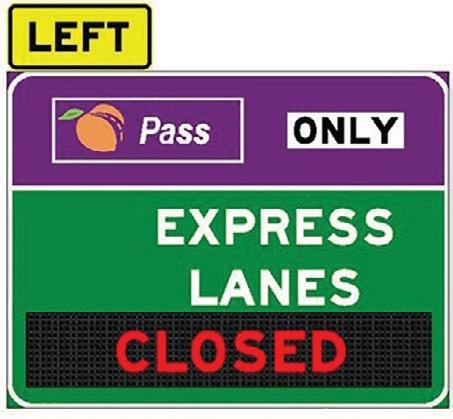
The I-75 South Metro Express Lanes are reversible lanes along I-75 South in Henry and Clayton counties. Reversible lanes change directions during the day to provide additional travel options during peak travel periods. When the travel direction is being reversed, signs will show the lanes are closed. On the I-75 South Metro Express Lanes, all vehicles, including motorcycles and electric vehicles, are required to pay a toll. Public transit buses, registered vanpools and emergency response vehicles may use the lanes toll-free if they have a Peach Pass.
Express lanes entrance sign
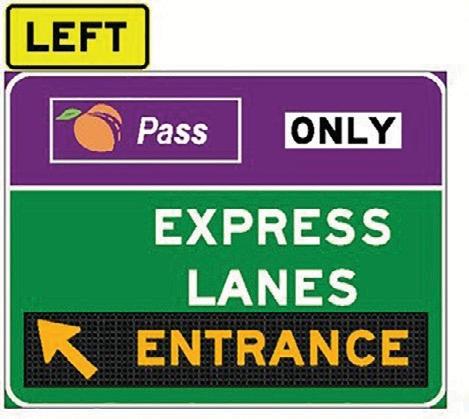
Express lanes closed sign
Section 7 Continued: Traffic Signals and Signs
Traffic Signals and Signs
Traffic signals are placed at intersections to control the orderly movement of traffic and to prevent crashes. Drivers (including bicyclists) and pedestrians must obey these signals except when an officer is directing traffic. If a traffic signal is not functioning at all at an intersection, all drivers must treat the intersection as if a stop sign is posted for all directions. If a traffic signal is malfunctioning and flashing, drivers must proceed based on the color of the flashing signal they are facing: if the driver is facing a yellow flashing signal, the driver may proceed with caution; if the driver is facing a red flashing signal, the driver must stop and wait until it is safe to proceed.
Red light

A red light means you must make a complete stop before entering the crosswalk or intersection and wait until the light turns to green before proceeding.
Yellow light

A yellow light warns that the light is changing from green to red. Slow down and prepare to stop.
Green light

A green light means you may proceed if it is safe to do so after stopping for pedestrians and yielding to vehicles within the intersection.
Green up arrow
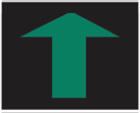
A green arrow means you may proceed carefully only in the direction the arrow is pointing after stopping for pedestrians and yielding to vehicles within the intersection. In this case you may go straight ahead only.
Green left arrow
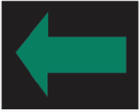
A green arrow, in this case, means you may turn in the direction of the arrow after stopping for pedestrians and yielding to vehicles within the intersection.
Yellow right arrow
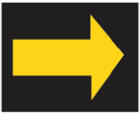
A yellow arrow may appear after a green arrow and warns you to clear the intersection.
Flashing red light

A red flashing light means you must stop completely (treat as you would a stop sign). Proceed with caution only after yielding the right-of-way to pedestrians and to other vehicles at the intersection.
Flashing yellow light

A yellow flashing light means you must slow down and exercise caution before proceeding through the intersection.
Flashing yellow arrow
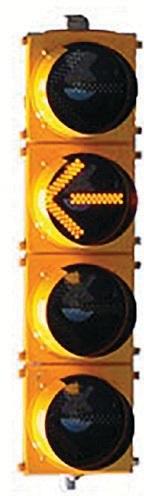
A flashing yellow arrow means you may turn left after yielding to oncoming traffic and pedestrians (oncoming traffic still has the green light).
Lane Control signals
Some roadways are designed to accommodate different traffic demands during the day through the use of a reversible lane system. Appropriate travel lanes on a roadway utilizing a reversible lane system are indicated as follows:
No travel allowed signal
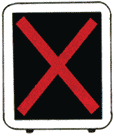
No travel allowed in this lane in the direction you are going.
Clear the lane or left turn permitted signal
Section 7: More Signals & Signs
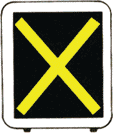
"Steady" - clear the lane; "Flashing" - left turn permitted.
Travel in lane signal
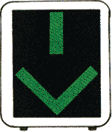
Travel in lane.
Overhead Lane Signs
Left turn only sign
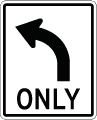
Left turn only.
Straight or left turn only sign
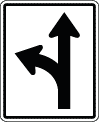
Straight or left turn only.
Right turn only sign
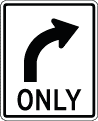
Right turn only.
Pedestrian Signals
Walk signal
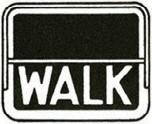
Leave the curb to cross the street.
Orange Don't Walk signal
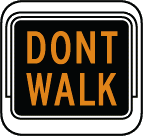
Do not leave the curb.
Red Don't Walk signal
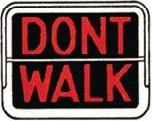
Flashing - do not leave the curb, but complete walking across the street if already started.
Pedestrian safety guide sign
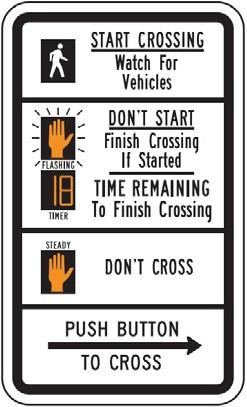
Pedestrian-Hybrid Beacons (PHB)
This signal is known as a Pedestrian Hybrid Beacon (PHB), and it is designed to help pedestrians safely cross busy streets. Pedestrians push a button to activate the overhead beacon and stop road traffic. When WALK appears on the Pedestrian signal, pedestrians can cross the street.
Dark
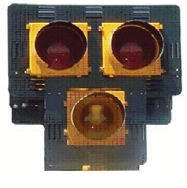
The PHB remains DARK for traffic unless a pedestrian activates the push-button.
Flashing
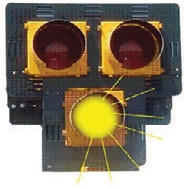
When a pedestrian presses the button, the signal is activated. Approaching drivers will see a FLASHING YELLOW signal for a few seconds.
Solid Yellow
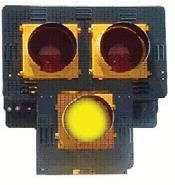
The flashing yellow is followed by a SOLID YELLOW signal, indicating drivers should reduce speed and be prepared to stop.
Solid Red
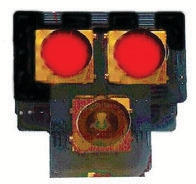
The solid yellow is followed by double SOLID RED signals, requiring drivers to stop.
Flashing Red
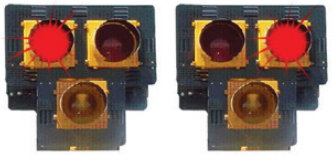
The double solid red signals are followed by alternating FLASHING RED signals. This requires drivers to come to a full STOP, and proceed when pedestrians have cleared the crosswalk. The signal will then go dark until activated again by a pedestrian.
Section 7 Continued: Other Signs & Signals
Pavement Markings
Pavement markings, like highway signs, are used to warn and direct drivers and to regulate traffic.
Stop Lines
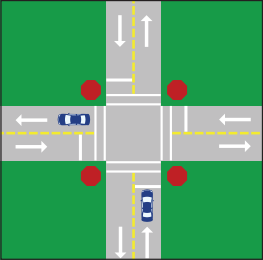
Stop lines are white lines painted across the pavement at intersections indicating the point beyond which your vehicle should not cross if you are stopping for a traffic control device. In urban areas, the line is usually located about four feet before the crosswalk. Drivers must come to a complete stop at the stop line, when present, not at the actual stop sign or traffic signal.
Crosswalk Lines
These white lines are painted across, or partially across the pavement. Sometimes they will be painted in a ladder pattern. When pedestrians are in the crosswalks, they have the right-of-way over motor vehicles. Crosswalks are sometimes in the middle of a block in residential areas, and in some cases, a pedestrian crossing signal is located at the white line.
Railroad Crossings
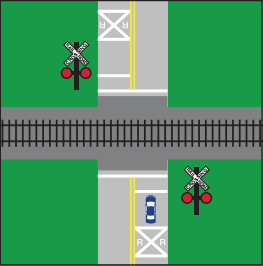
When a road is crossed by a railroad crossing, the pavement is usually marked with a large X and two R's. At railroad crossings, a yellow line is always placed on the right side of the center line to prevent passing. The crossing is sometimes equipped with control arms and/or emergency lights, to warn drivers of approaching trains. The driver of the vehicle must stop if warning signals indicate a train is approaching.
Center Lines
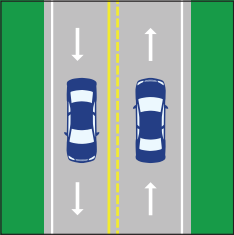
These are used to separate traffic moving in opposite directions on paved roadways. Broken yellow lines are used when there are only two lanes and it is safe to pass in either direction.
No Passing Lines
Single Lines
These single, solid yellow lines on two-lane roads indicate zones where passing is prohibited. They will be located on the right of the broken yellow line when they apply to the lane in which you are traveling. In some instances, both yellow lines will be solid, indicating it is not safe for passing in either direction.
Double White Lines
These are double white line (dashed or solid) pavement markings on roadways that indicate where vehicles can or cannot cross to access the adjacent lane. When the double white lines are dashed, vehicles are allowed to cross over to the adjacent lane. When the double white lines are solid, lane changes are prohibited.
Edge Lines
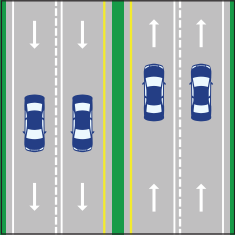
These are the solid white lines along the side of the pavement. They serve as safety guides, especially at night when it is difficult to see the edge of the road. A yellow edge line may be used on the left side to warn of narrow or raised medians.
Lane Lines
These are the white dashes that mark the individual lanes of travel on streets and highways having more than one lane for traffic moving in the same direction.
When there are four or more lanes with traffic moving in opposite directions, two solid yellow lines mark the center of the roadway. You may cross these lines only to make a left turn into or from an alley, private road, driveway, or another street. When traveling on a multi-lane road, stay in the right lane except to pass other vehicles traveling in the same direction
Traffic Striping
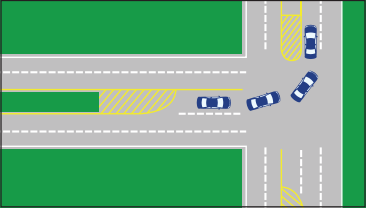
These markings, created by diagonal yellow lines, are on streets and highways indicating that the road is narrowing or there is an obstruction on the roadway. The area is similar to a triangle with solid yellow diagonal lines within the outside lines. Always keep to the right of these markings.
Turn Lanes
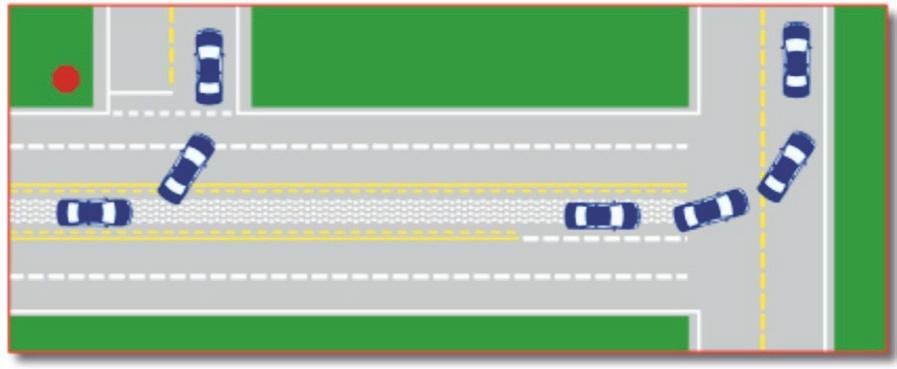
These lanes, bordered by solid yellow and/or broken yellow lines, is in the center of many streets and highways to make left turns. A motorist desiring to turn left should proceed to the turn lane just prior to making a left turn. Georgia law prohibits the use of this lane for any purpose other than making a left turn. You may enter this lane no more than 300 feet from the location of the left turn.
When a turning lane is provided for vehicles traveling in both directions, you should use extreme caution before entering the turning lane to make a left turn. There may be a vehicle traveling in the opposite direction also entering the turning lane to make a left turn. This is especially problematic in congested areas.
Bicycle Lanes
These are solid white lines typically located between the farthest right traffic lane and the curb or edge of the roadway. If there is a right-turn-only lane present, the bicycle lane will be located to the left of the right-turn-only lane in order to safely accommodate bicycles traveling straight through the intersection. Bicycle lanes may also be marked with painted symbols of a bicycle. Drivers of motor vehicles are prohibited from driving or parking in the bicycle lane, except to cross over it to make a turn. When crossing over a bicycle lane to make a turn, motorists must yield to bicyclists that are present.
Roundabouts
Navigating a roundabout
Roundabouts are sometimes used at intersections instead of stop signs. The purpose of a roundabout is to allow the intersection to handle heavier traffic flow without the need for a signal or a four-way stop. When entering a roundabout, traffic laws concerning right-of-way still apply. You must yield to other traffic that is already in the roundabout. You will always enter a roundabout to the right, and continue circling until you have reached the roadway onto which you want to turn. When reaching the desired road, you will always exit to the right.
Pedestrians
- Approach: At the pedestrian crosswalk, look to make sure cars stop for you. Use pedestrian crossing signal if available.
- Cross: Cross to the pedestrian refuge. Look to make sure cars stop for you. Finish crossing to the opposite sidewalk. Never cross to the center island.
Cyclists
Experienced cyclists may navigate roundabouts like motorists. Do not hug the curb. Ride in the middle of the lane to prevent vehicles from passing you. Stop for pedestrians in crosswalks.
Children or cyclists who are not comfortable entering the flow of traffic should walk their cycles and act as pedestrians.
Navigating a Single Lane Roundabout
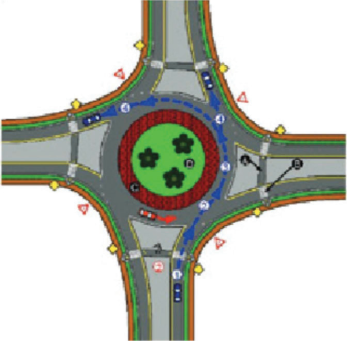
Motorists
- Approach: Slow down to the posted advisory speed. Stop for pedestrians in the crosswalk; they have the right of way.
- Enter: When entering the roundabout, yield to all circulating vehicles. Wait for a gap and then merge into traffic in the roundabout. Traffic in a roundabout always circulates counterclockwise.
- Proceed: Continue circling through the roundabout until you reach the roadway onto which you want to turn.
- Exit: Signal, then bear right to exit the roundabout. Slop for pedestrians in the crosswalk.
Navigating a Multilane Roundabout
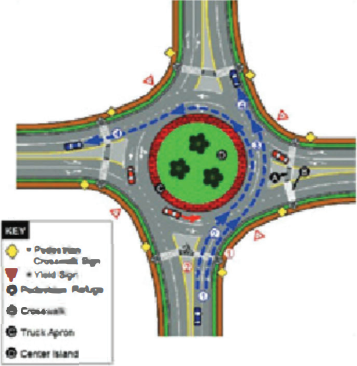
Motorists
- Approach: Follow the lane use signs & pavement marking arrows. Get into the correct lane before entering the roundabout. Slow down to the posted advisory speed. Stop for pedestrians in the crosswalk; they have the right of way.
- Enter: When entering the roundabout, yield to all circulating vehicles in both lanes. Wait for a gap and then merge into traffic in the roundabout. Traffic in a roundabout always circulates counterclockwise. Maintain your lane as you enter the roundabout.
- Proceed: Continue circling through the roundabout until you reach the roadway onto which you want to turn. Do not change lanes in the roundabout.
- Exit: Signal, then bear right to exit the roundabout. Stop for pedestrians in the crosswalk.
*Please note that these roundabout diagrams are examples only and do not represent all roundabout designs.